Sambucus cerulea
Blue Elderberry
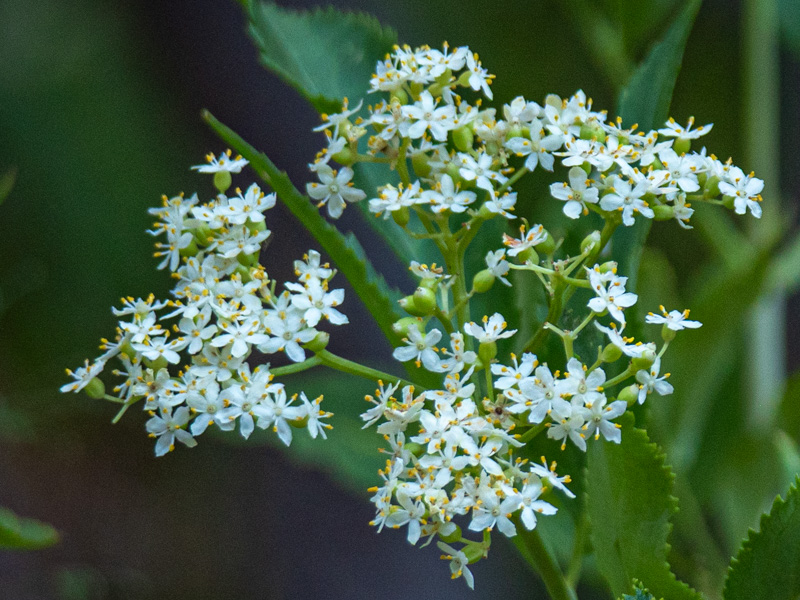
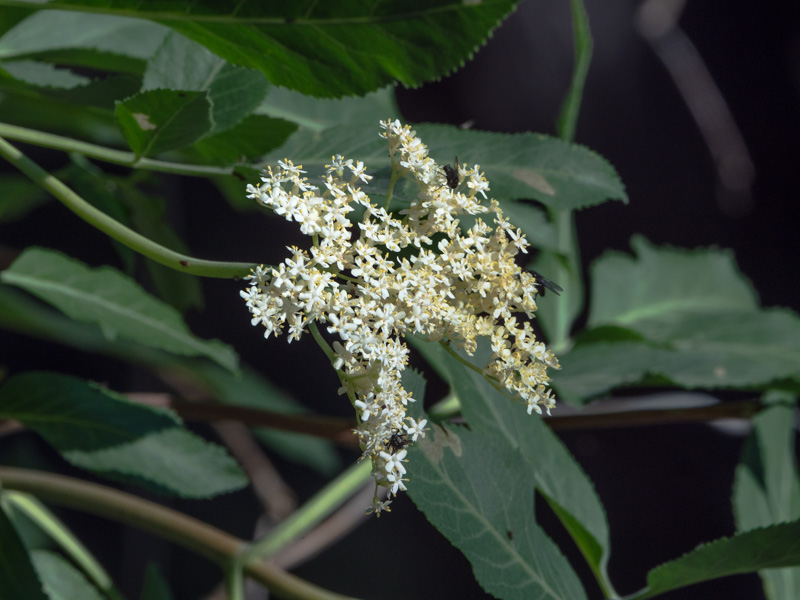
The blue elderberry is a remarkable and highly versatile western native that serves as a cornerstone of riparian ecosystems. Notable for its large, flat-topped clusters of creamy white flowers that transform into heavy, hanging bunches of powder-blue berries, this plant is as visually stunning as it is ecologically valuable. It acts as an oasis for local wildlife, attracting countless pollinators and providing a vital food source for dozens of bird and mammal species.
Highly prized by indigenous peoples of western North America, including the Cahuilla and Coast Salish, the blue elderberry served numerous functional and medicinal purposes. The sweet berries were cooked or dried for food and winter storage, and also processed into rich dyes for basketry. Its soft, pithy wood was easily hollowed out to fashion tools such as arrows, whistles, flutes, and clapper sticks. Medicinally, bark and root infusions were applied as antiseptic washes or poultices for inflammations and boils, while flower extracts were brewed to treat fevers.