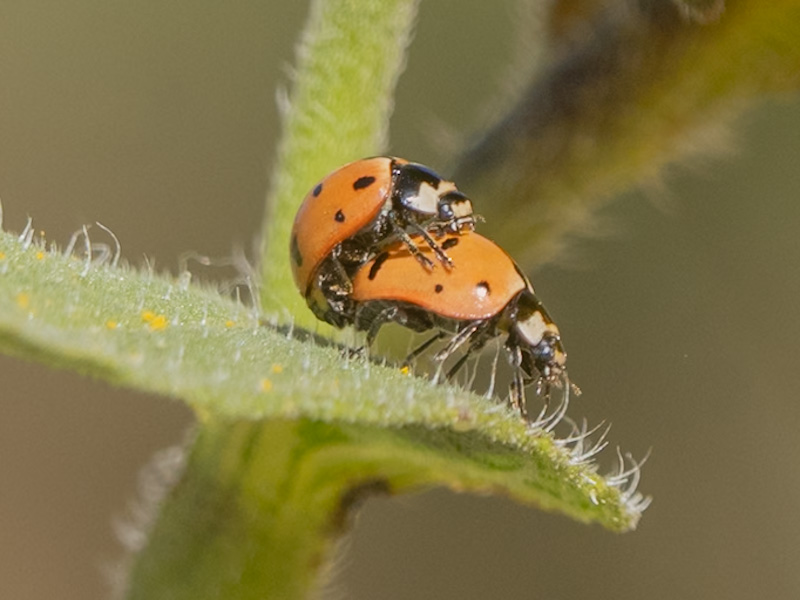
Coccinella novemnotata
Nine-spotted Lady Beetle
Introduction:
Once one of the most widespread and ecologically important native ladybugs across North America, the nine-spotted lady beetle played a vital agricultural role by preying heavily on plant-damaging aphids. Over recent decades, its populations have experienced a severe and dramatic decline due to habitat changes and competition from introduced foreign ladybug species.
Life Cycle: Eggs are laid in clusters on the undersides of leaves near active prey colonies. Highly active larvae feed voraciously on aphids before attaching to leaves to pupate. Adults emerge to continue foraging and overwinter under leaf litter or plant debris.
Size 0.19 to 0.28 inch (0.47 to 0.71 cm)
Sexual Dimorphism: Females are generally larger than males and exhibit slight differences in head markings.
Metamorphosis: complete (egg, larva, pupa, adult)