Celastrina echo cinerea
Western Azure
Introduction:
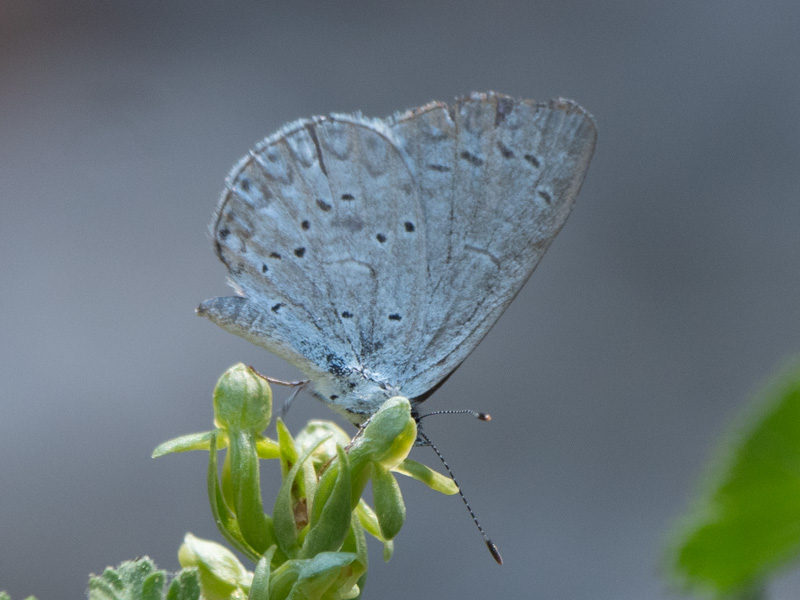
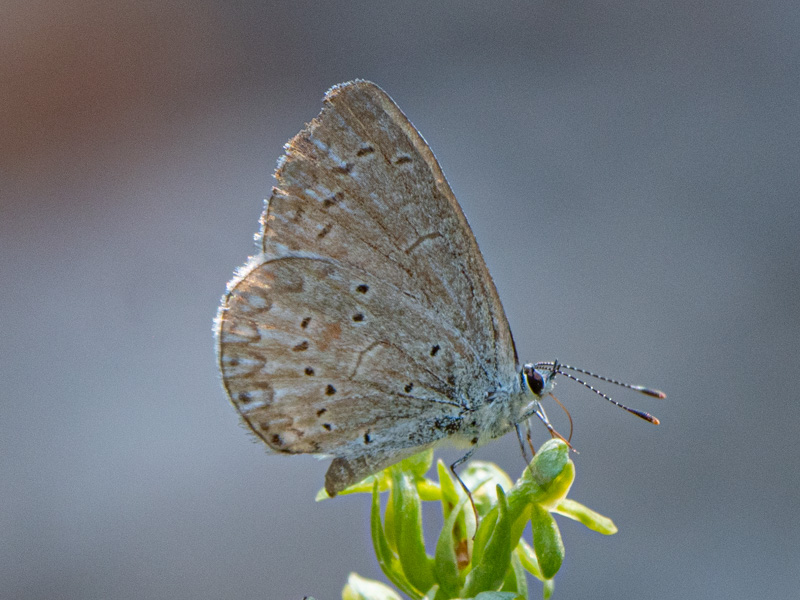
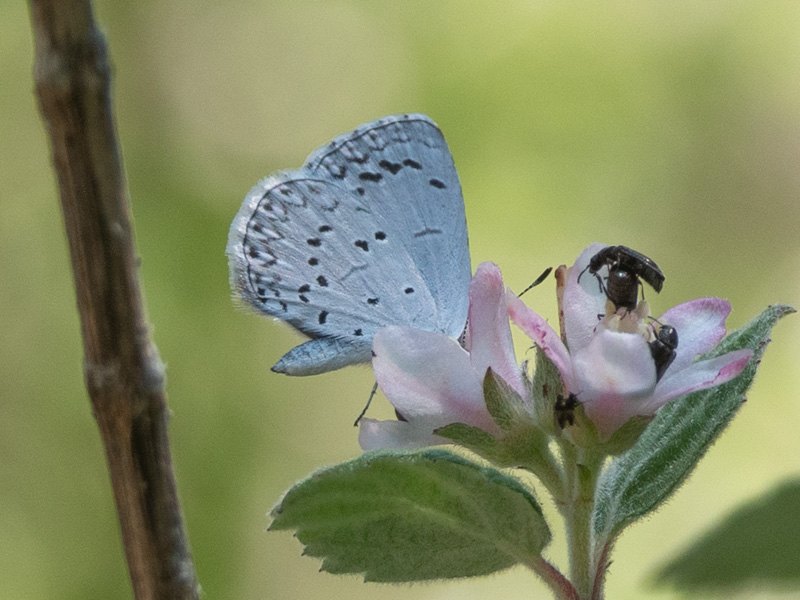
Celastrina echo, the echo azure or western azure, is a species of blue in the butterfly family Lycaenidae. Celastrina echo have been observed in mostly western regions of the United States, including California, Oregon, Arizona, New Mexico, and Montana. The taxonomic division of Celastrina butterflies has been a very complicated issue. Currently, most scientists agree that C.echo is a distinguished species. There are five sub-species with the Southwestern Azure (Celastrina echo cinerea) seen in the mojave. The butterflies in the Lycaenidae family in general are usually flat as larvae. The adult individuals are usually small and have hairy, ringed antenna-like tails. Their wings are mostly bright glowing blue and green. A large portion of Lycaenidae butterflies are found to have different associations with ants, either mutualistic, parasitic, or predatory.
Life Cycle:
Size 0.9 to 1.25 in (2.3 to 3.2 cm)
Sexual Dimorphism: Males are a bright, solid blue on the upper side with no black markings, while females are a more muted, dusky blue that often includes a broad black band along the outer edge of the forewings and a row of gray or black spots on the hindwings.
Metamorphosis: complete (egg, larva, pupa, adult)