Introduction:
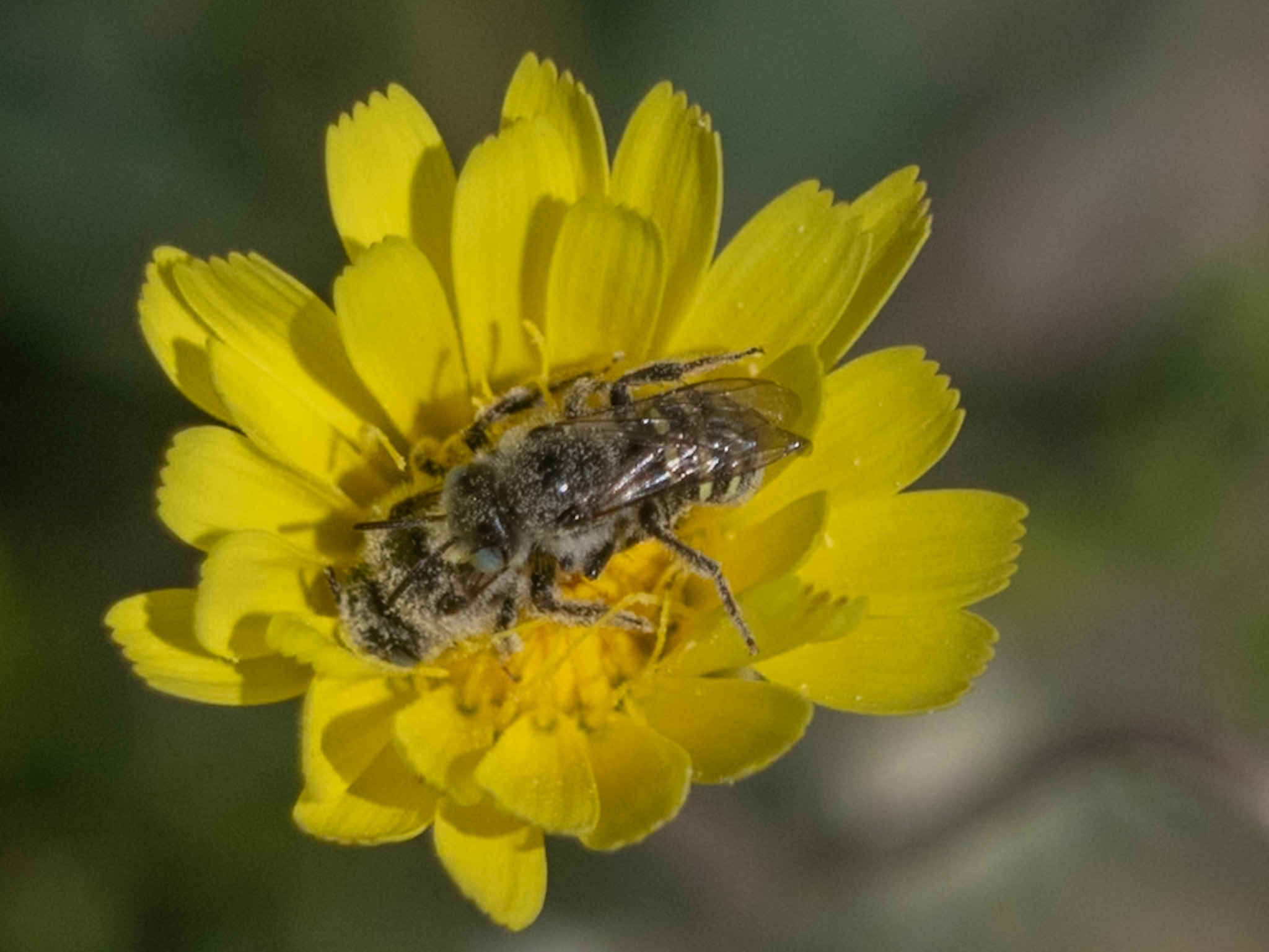
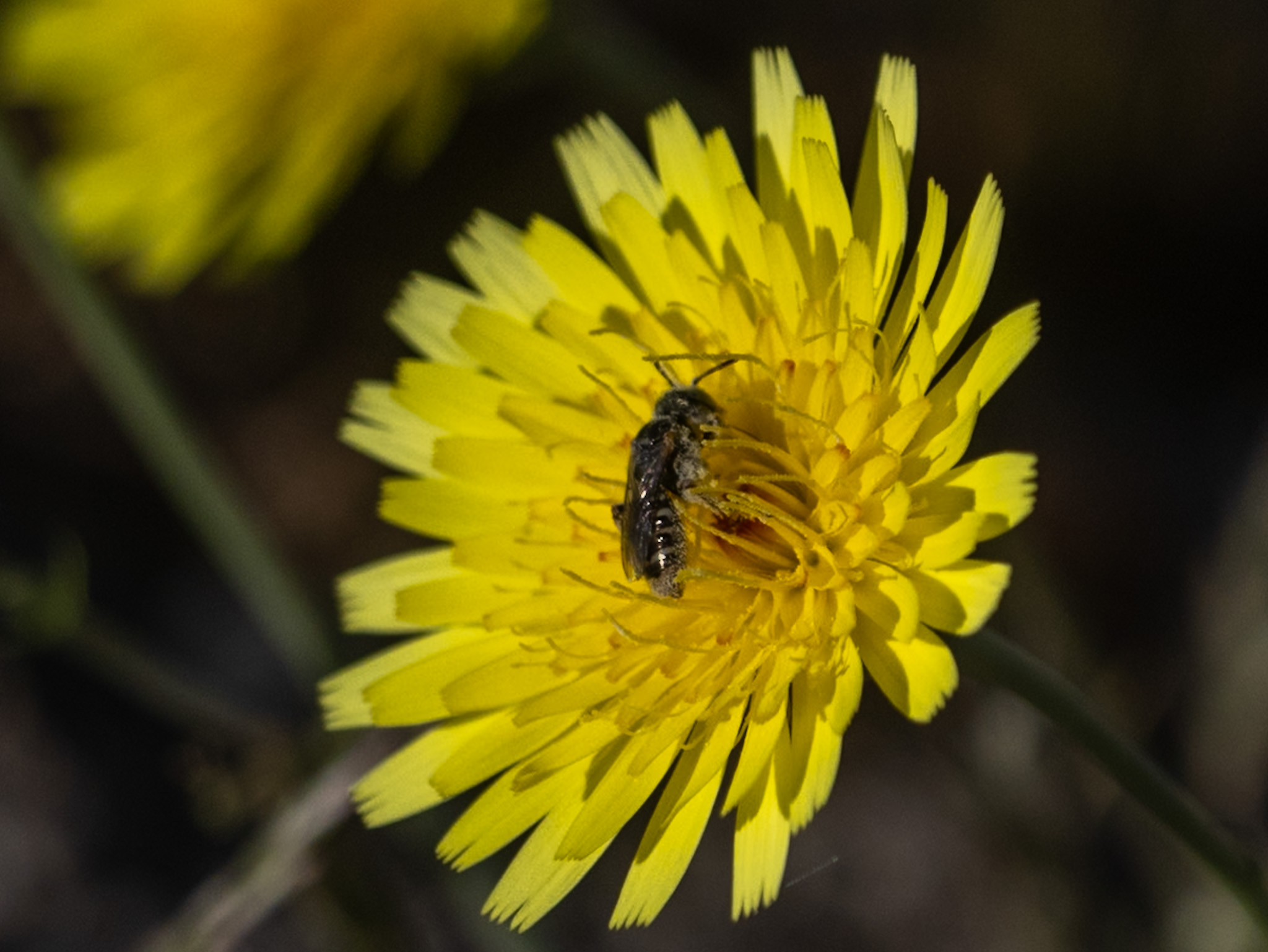
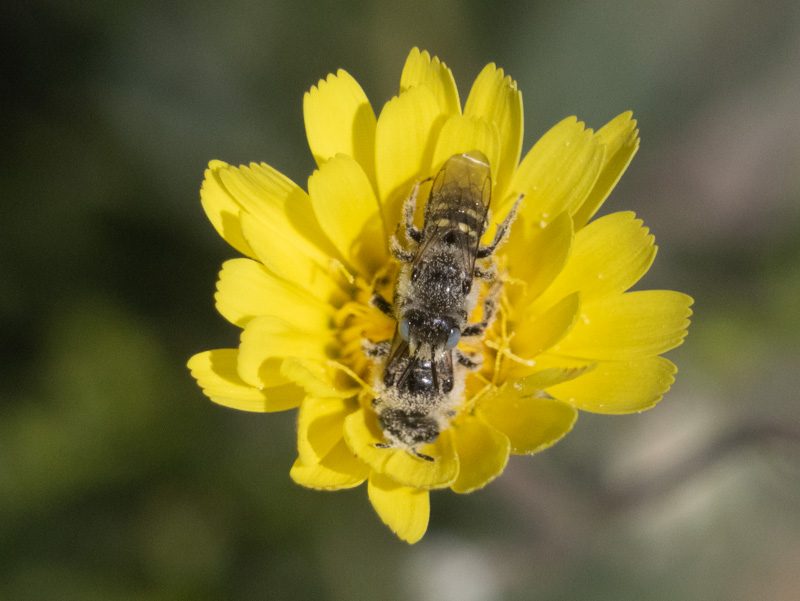
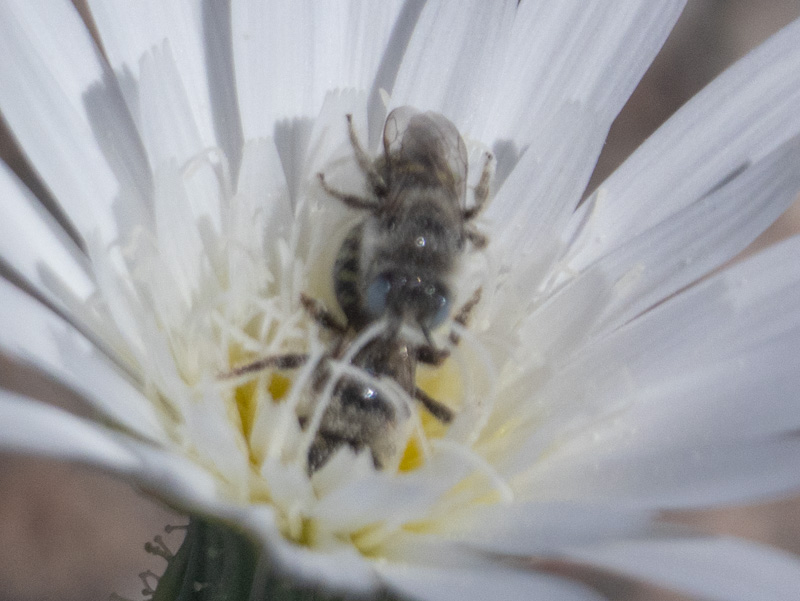
Calliopsis puellae is a small, specialized mining bee indigenous to the arid regions of southwestern North America. Known for its foraging affinity with midday-blooming desert flora, this solitary ground-nesting pollinator plays a vital ecological role in desert ecosystems despite its tiny size.
Life Cycle: Solitary females dig individual underground burrows in soil, creating a main shaft with small lateral brood cells. Females forage on local flowers (specializing on plants like desert-dandelions) to gather pollen and nectar. They mix the pollen and nectar into a food mass (bee bread) inside each brood cell. The female lays a single egg on top of the pollen mass in each sealed cell.
Size 0.28 to 0.31 inch (0.7 to 0.8 cm)
Sexual Dimorphism: Males exhibit high-contrast, vivid coloration. They typically feature extensive, bright yellow integumental markings across the entire face (including a solid yellow clypeus), and their legs and antennae are heavily marked with yellow. Their eyes often feature a distinct yellowish-green hue. Females are more drab. Only females possess scopae (dense patches of specialized, brush-like hairs on their hind legs) used to collect and transport large loads of pollen back to their subterranean brood cells. Only females have a stinger.
Metamorphosis: complete (egg, larva, pupa, adult)