Introduction:
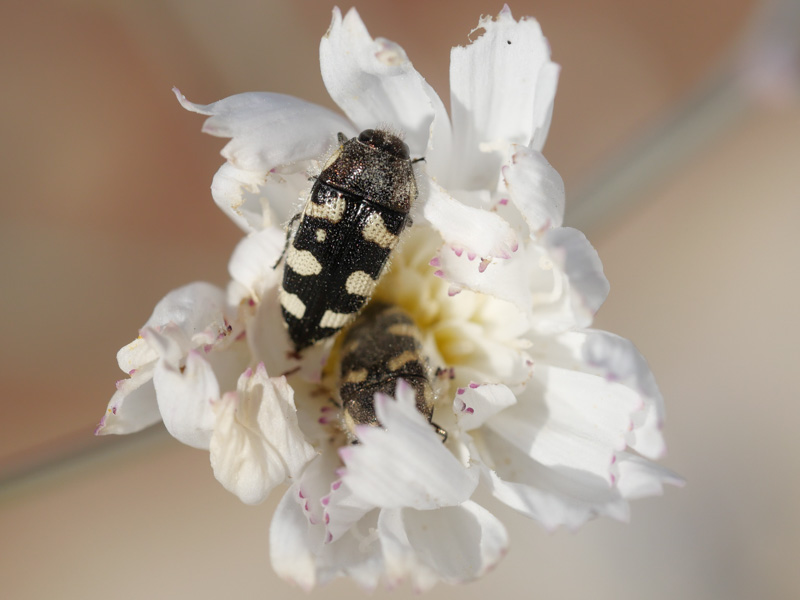
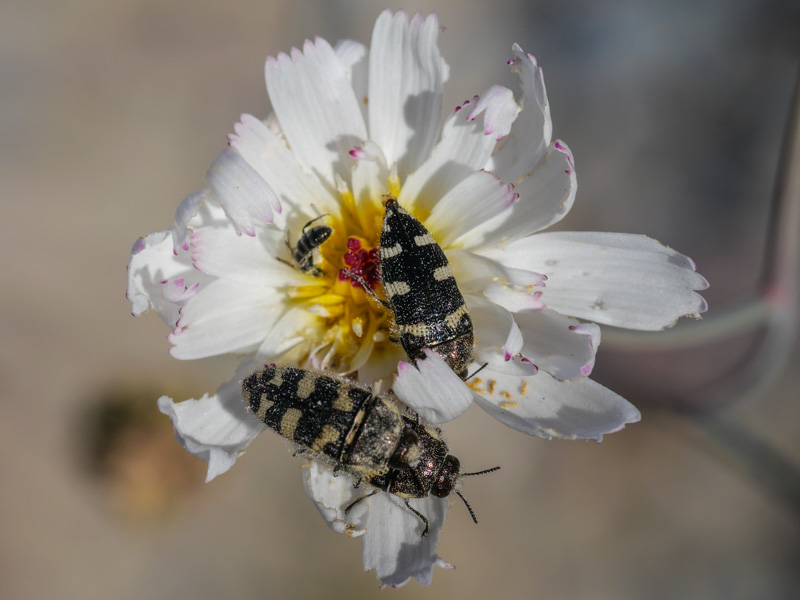
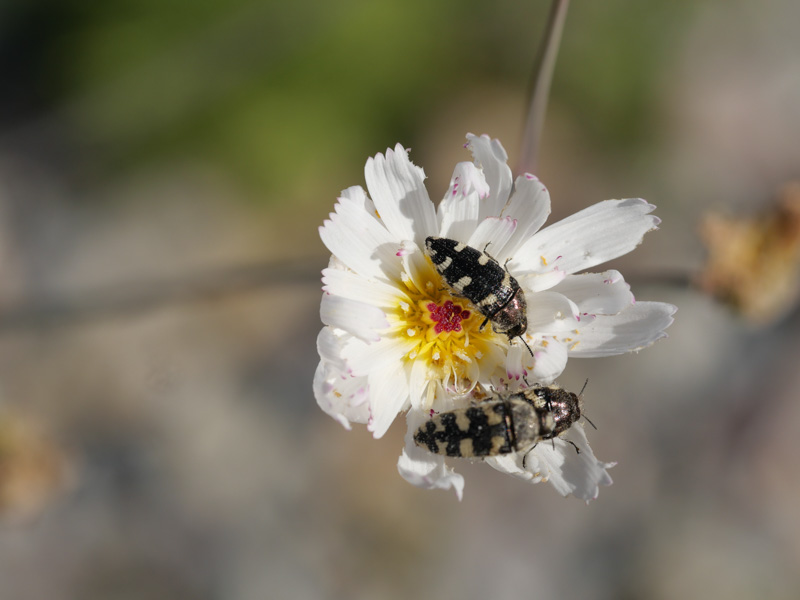
Acmaeodera tuta is a captivating species of metallic wood-boring beetle in the family Buprestidae, highly adapted to the xeric conditions of North American deserts. Renowned for its intricate yellow-and-black elytra patterns, this beetle plays an important ecological role as a wood decomposer in larval stages and a active desert pollinator as an adult during warm sunny weather.
Life Cycle: Adults lay eggs on host woody plants. Larvae bore into stems and wood to feed, then pupate within internal chambers before emerging as adult beetles.
Size 0.35 to 0.45 in (0.9 to 1.1 cm)
Sexual Dimorphism: Females are often slightly larger with broader abdomens, while males exhibit slightly narrower bodies.
Metamorphosis: complete (egg, larva, pupa, adult)