About
16001 Corn Creek Road
Las Vegas, NV 89124-8402
(702) 879-6110
A Green Oasis in the Desert with a Lake
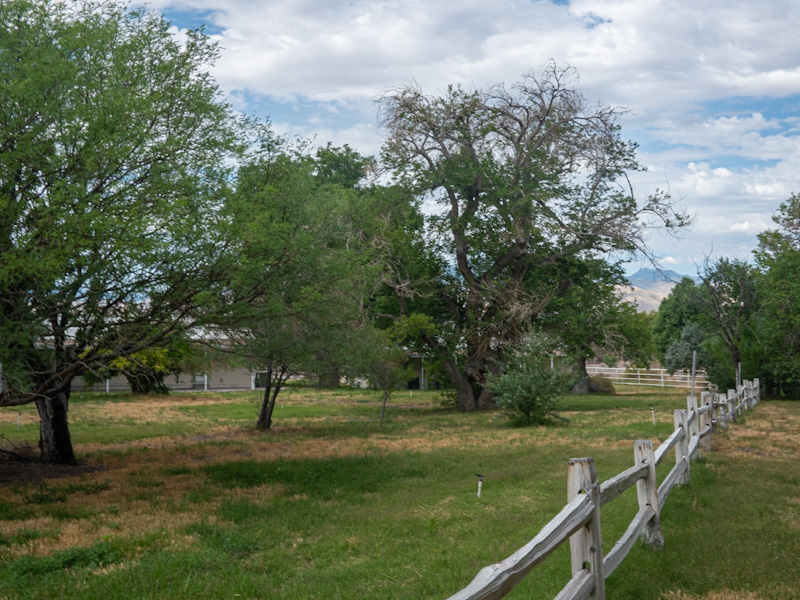
Established in 1936, the Desert National Wildlife Refuge is the largest wildlife refuge in the lower 48 states, spanning over 1.6 million acres. It protects a vast Mojave Desert ecosystem created to safeguard the desert bighorn sheep, featuring rugged mountain ranges, ancient springs, and striking solitude just north of the Las Vegas valley. The Corn Creek Visitor Center area acts as a lush, green oasis filled with mature trees, historic structures, and bubbling springs.
16001 Corn Creek Road
Las Vegas, NV 89124-8402
(702) 879-6110
There is covered parking, indoor restrooms, drinking fountains, a large covered outdoor area to rest and a large visitor center with educational exhibits and a gift shop.
There is fresh water for the big horn sheep at this location, although the flood control basin can have water after rain. The park is bordered by the mountain. There is a nature trail located just northeast of the park. Visitors can walk the trail, enjoy the bench seating, and view the informative signs along the path.
Desert National Wildlife Refuge was established to protect the Desert Bighorn Sheep and other desert wildlife. Today, the refuge is home to over 500 species of plants, over 320 species of birds, 52 species of mammals, 32 species of reptiles and is one of the best birdwatching locations in Las Vegas.
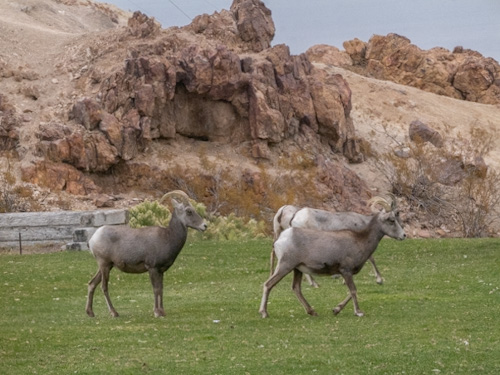
The refuge was established in 1936 by president Roosevelt in order to provide habitat for the desert bighorn sheep and other desert wildlife. Today, it is the largest wildlife refuge outside of Alaska. All told, it protects hundreds of different species of plants & animals across seven different life zones. Two places to see them are; Peek-a-Boo Canyon, approximately 17 miles (27 km) from Corn Creek and Quail Springs guzzler (summer), on Gass Peak Road, approximately 14.5 miles (23 km) from Corn Creek. These roads are rough requiring high clearance vehicles with good tires.

Near the cabin is the Pahrump Poolfish Refugium. Here, you can look through the viewing windows at the small fish living in a man-made environment much like the spring where they originally lived. Honestly though, it is really hard to see anything. That spring ran dry, and this structure holds most of the world’s few remaining survivors of this species, Pahrump Poolfish (Empetrichthys latos latos). The refugium isolates and protects them from non-native predators such as crayfish and bullfrogs that were illegally introduced here at Corn Creek and many other places in Southern Nevada.
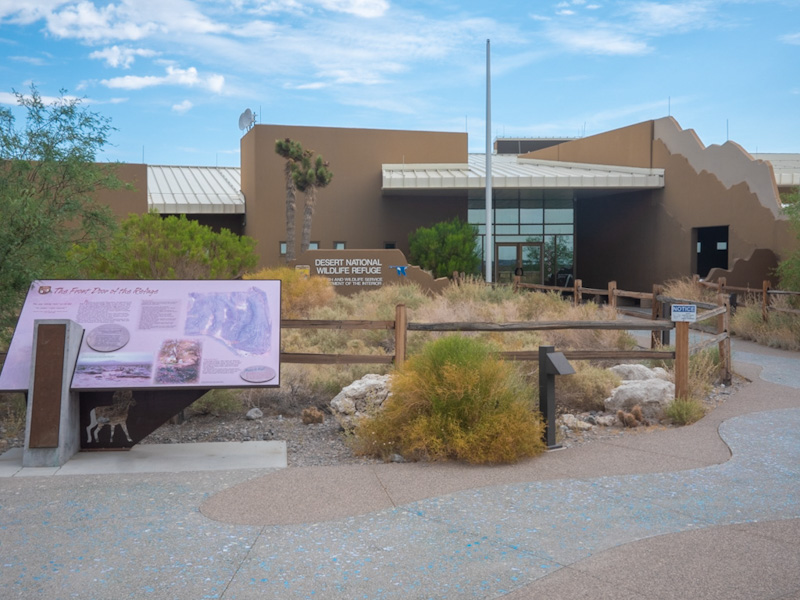
The visitor center for the Desert in National Wildlife Refuge at Corn Creek is a modern, large building, which is usually closed in the summer. To the south of the visitor center is the Richardson ranch and stagecoach buildings, along with additional structures needed for the park service. Established in 1936, the wildlife refuge covers land of historical use and significance to the Nuwuvi (Southern Paiute) people, and petroglyphs from this culture dot areas of the refuge.
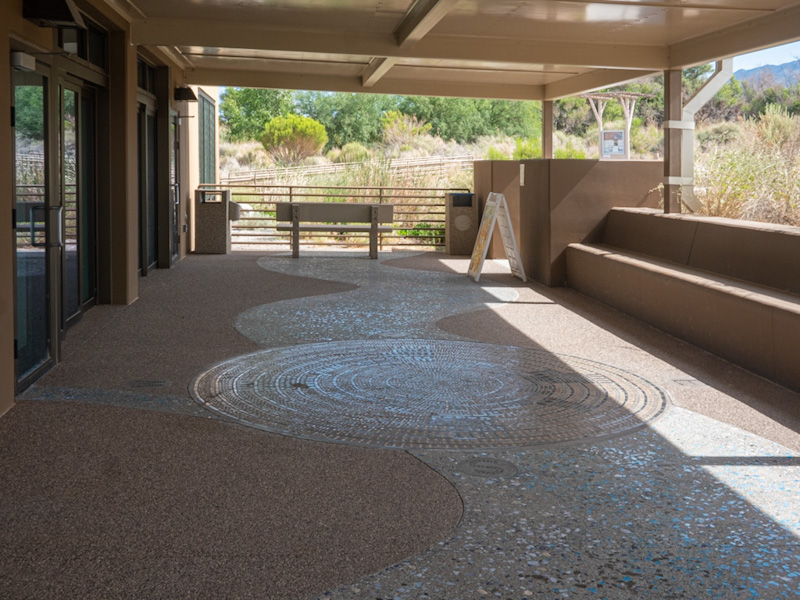
Because this is one of the main facilities of the reserve, the visitor center is large with this lovely rest area with bathrooms and drinking fountains. In addition there are living quarters and garages for vehical repair.
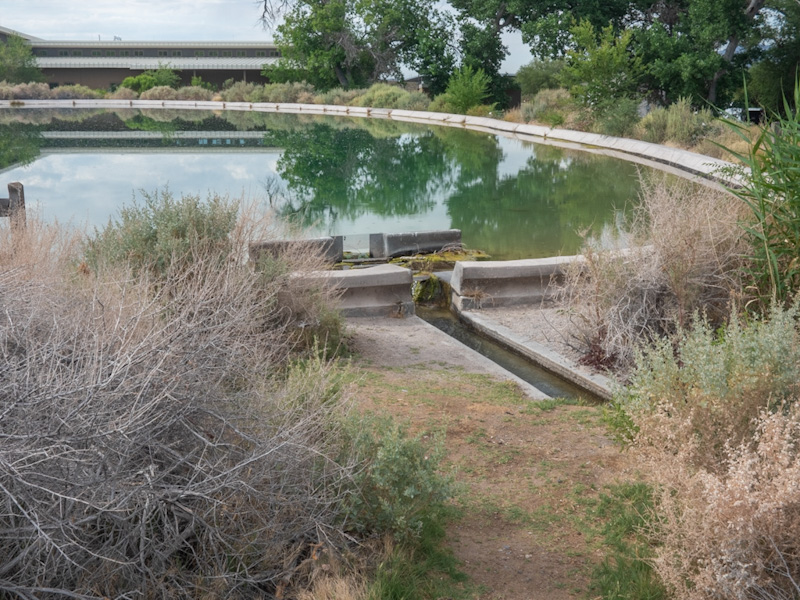
Originally, there were two ponds with natural soil. To protect the fish, the water was consolidated to the single concrete pool you see today, with streams above and below. Despite the artificial pond, desert birds water here, usually in flocks, including horned grebe, black throated sparrows and occaisionally, ducks and waders.
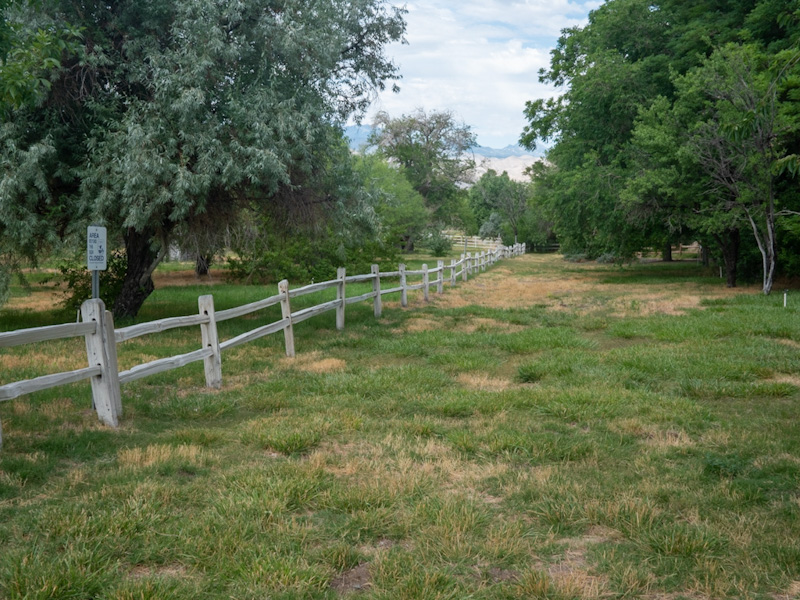
At the Richardson ranch, the orchard was used to produce fruit for pies for the local miners. Today, the pecan trees, fruit trees and Arizona grape draw birds almost year round. Along with the water, this makes Corn Creek one of the berst birdwatching locations in the valley.
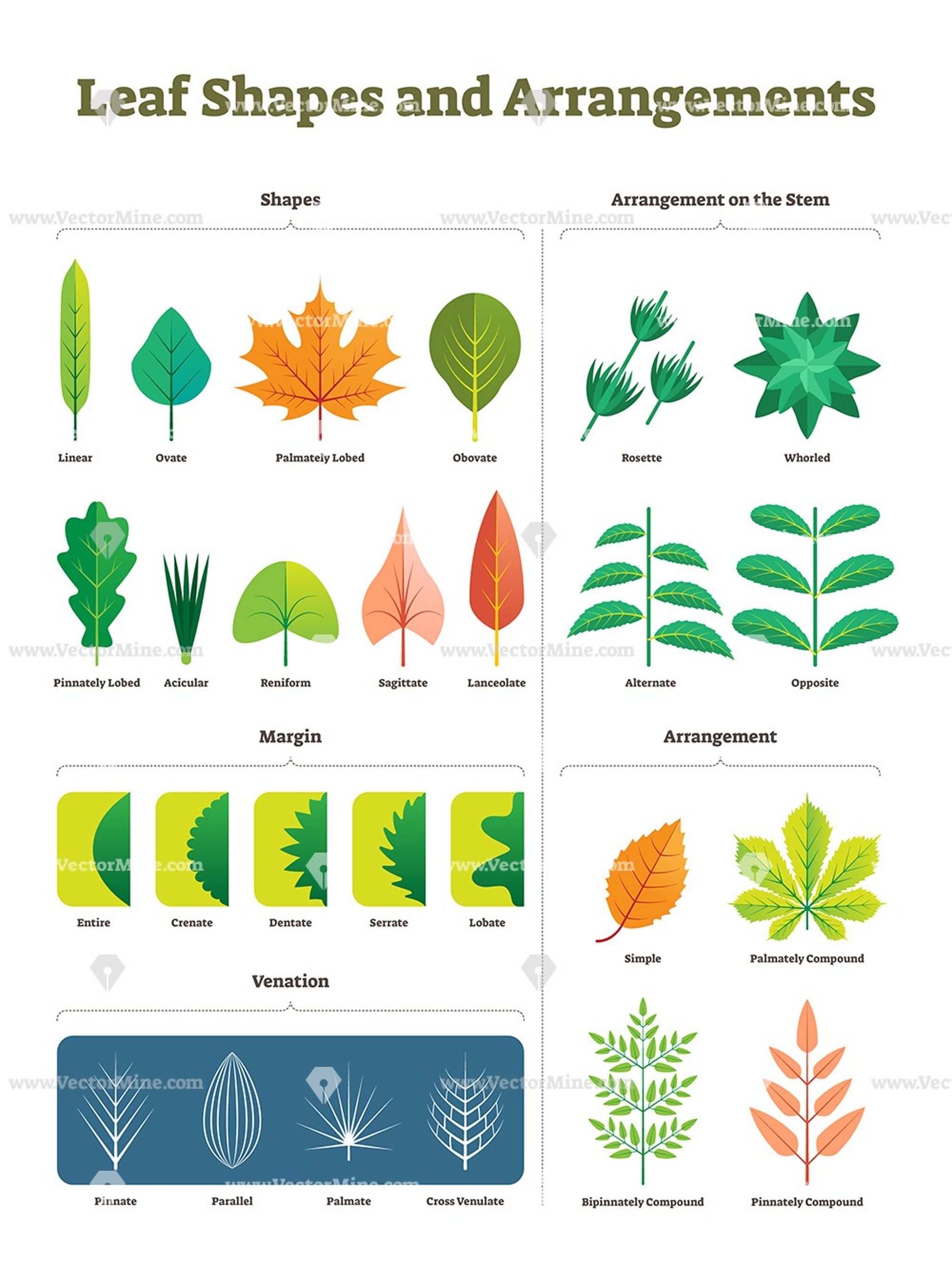
Plant anatomy can help classify species, especilly if you know the terms to enter in the search engine.
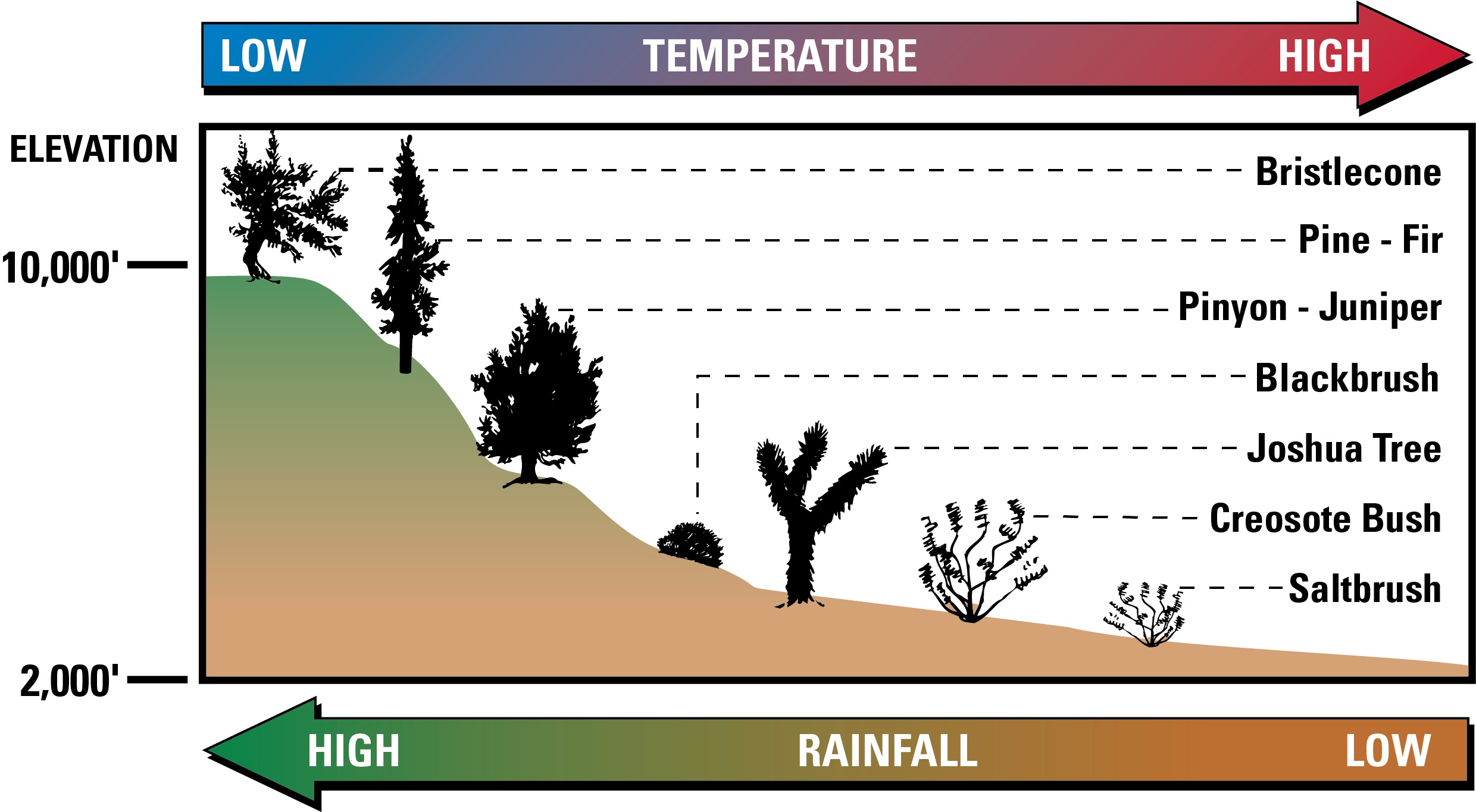
Mojave vegetation biomes
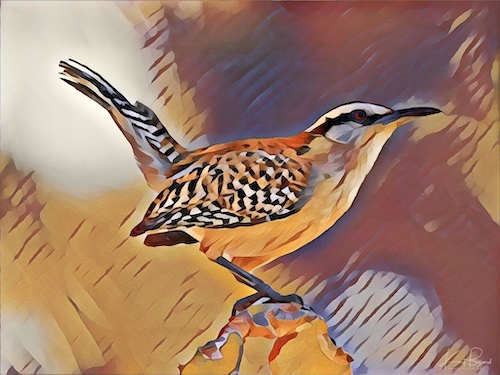
Bird Markings are often colorful and one way to identify species.
I am usually out hiking, birding or traveling but you can reach me at: