Names and Taxonomy
- Common Names:
- Synonyms: Pulicaria hispanica, Pulicaria arabica, Pulicaria arabica var. hispanica, Pulicaria uliginosa, Pulicaria vulgaris
- Family: Asteraceae (Sunflower)
- Genus Information:
Spanish False Fleabane
It is known for its woody, rhizomatous root system, which allows it to resprout from roots even after being pulled, making control difficult. While it is technically a perennial in some life cycles, its ability to spread and act aggressively in some regions means it is often referred to as a weed. It is native to Europe, particularly Spain and Portugal, and it is known as an introduced species in California, Arizona, and Clark County, Nevada, where it grows as a weed on roadsides, wetlands, riparian corridors, and other damp, disturbed areas. It is an annual, biennial, or perennial herb growing a few centimeters tall to well over a meter tall from a rhizomatous root system. The leaves are alternately arranged with blades in a variety of shapes from linear to oblong or oval. The herbage is coated in soft hairs. The inflorescence bears many flower heads. Each head has narrow, pointed, hairy phyllaries, a large dense center of many yellow disc florets, and a short fringe of many rectangular yellow ray florets, which are only about 2 millimeters long each. The fruit is an achene tipped with a pappus of bristles.
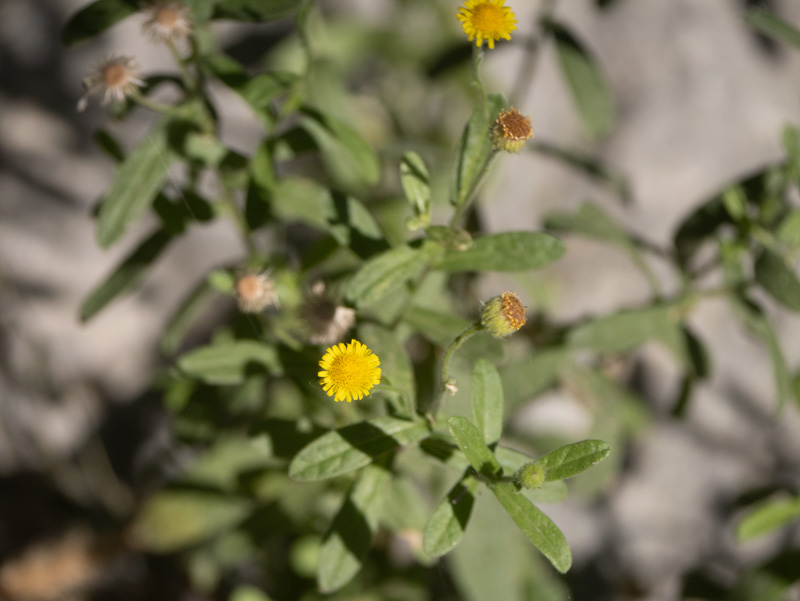
Clark County Wetlands Park
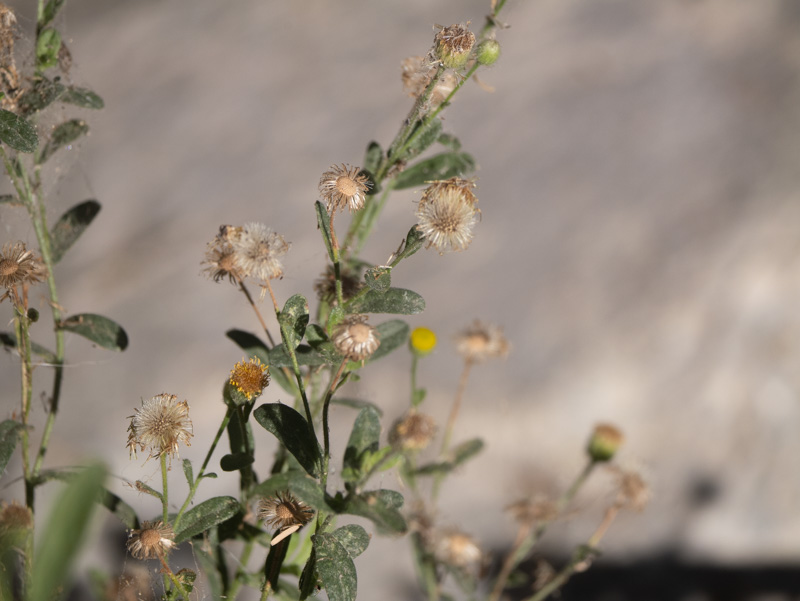
Clark County Wetlands Park
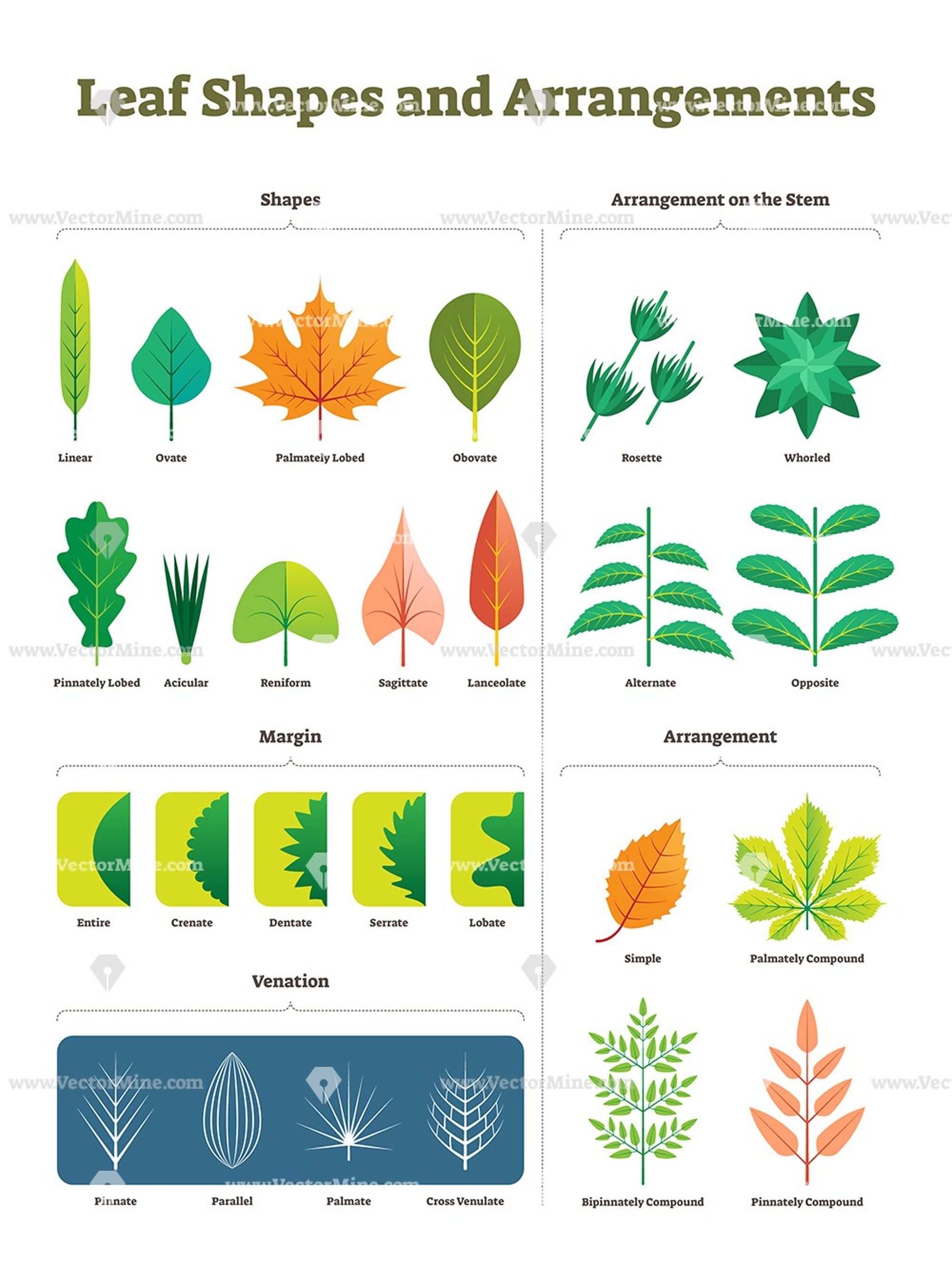
Plant anatomy can help classify species, especilly if you know the terms to enter in the search engine.
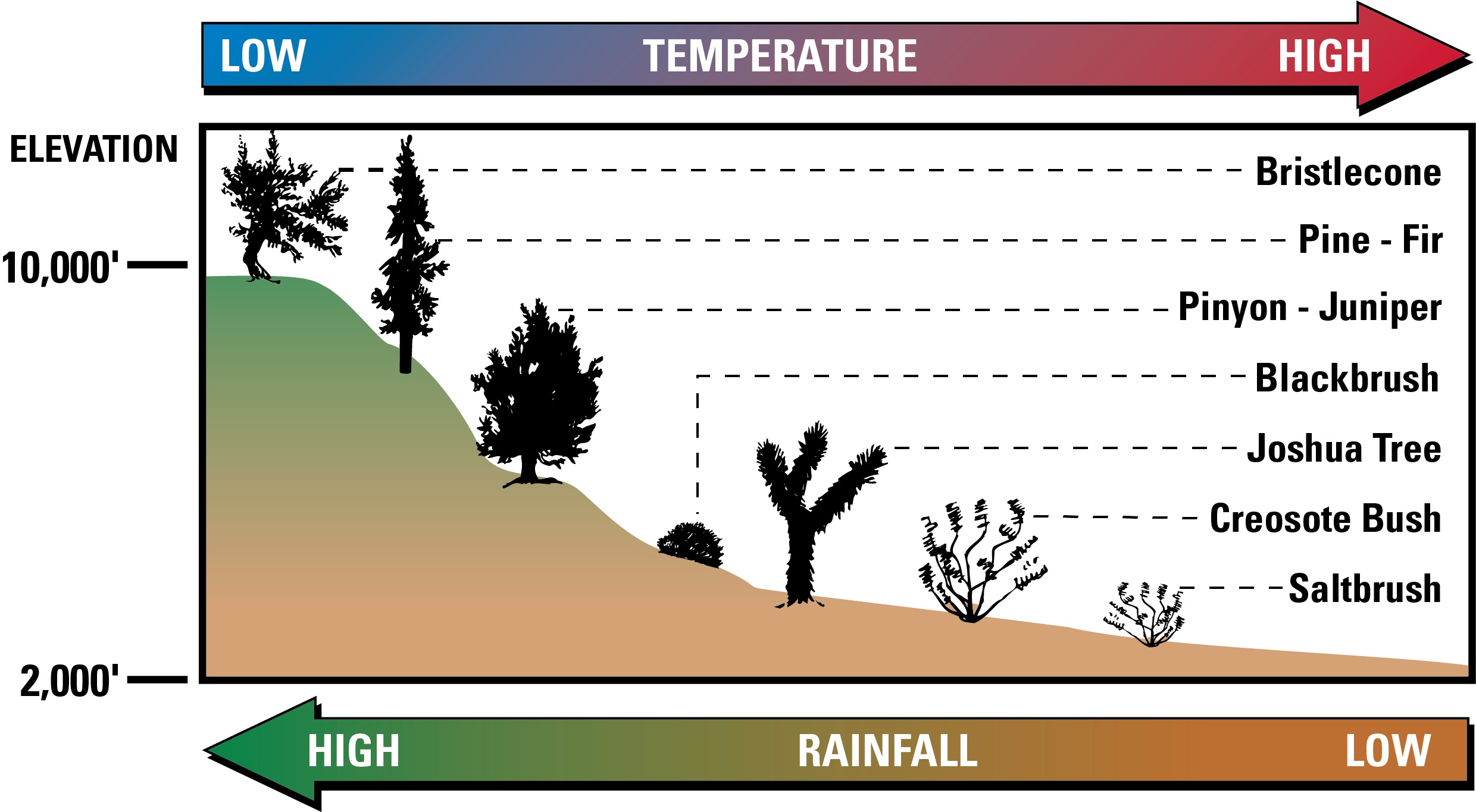
Mojave vegetation biomes
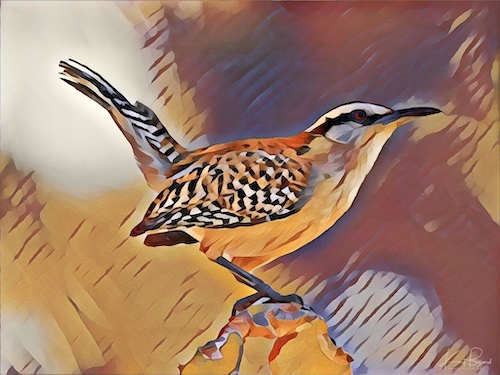
Bird Markings are often colorful and one way to identify species.
I am usually out hiking, birding or traveling but you can reach me at: