Phoradendron californicum
Desert Mistletoe
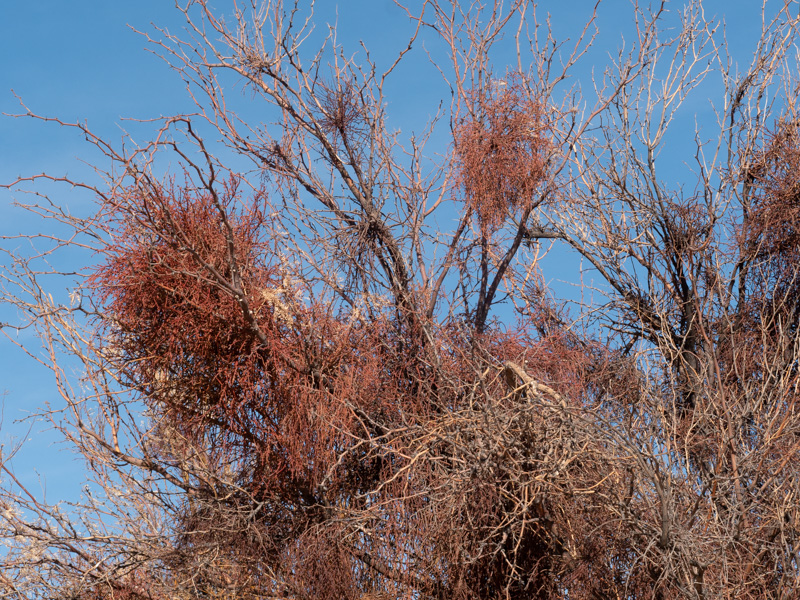
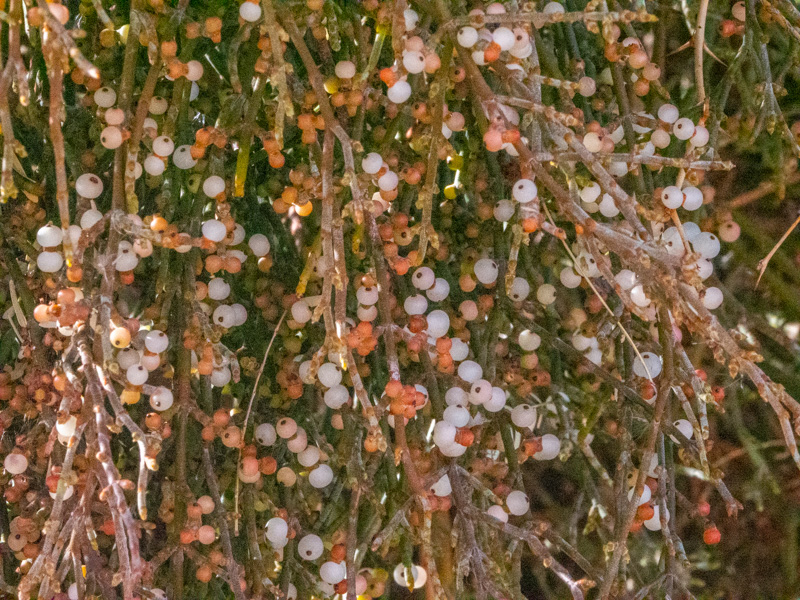
It is a hemiparasitic plant found in the Mojave and Sonoran deserts that grows on host trees like mesquite and palo verde. It is a leafless plant with brittle, jointed stems that produces small red berries in the winter, which are a vital food source for birds like the phainopepla. While it takes water and nutrients from its host, it also photosynthesizes. The white to reddish fruits are edible, but native tribes ate only the fruits of mistletoes growing on mesquite (Prosopis), ironwood (Olneya tesota) or catclaw acacia (Acacia greggii). Found growing on palo verdes (Parkinsonia) or Condalia (desert buckthorn) the fruits are considered inedible. The Seri people consider desert mistletoe fruit ripe and harvestable once it turns translucent. Harvest is done by spreading a blanket below the plant and hitting it with sticks to release the fruit. Seri consumed the fruit raw. The Tohono O'odham also consumed the fruit raw. River Pima ate the fruit boiled and mashed, which made it the consistency of a pudding. The Cahuilla gathered the fruits November through April and boiled them into a paste with a sprinkle of wood ash added to the pot.